Robotics Integration System
for Sheet Metal Stamping
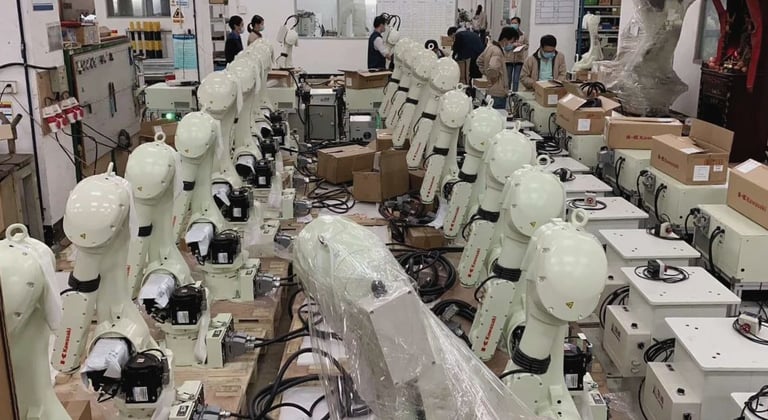
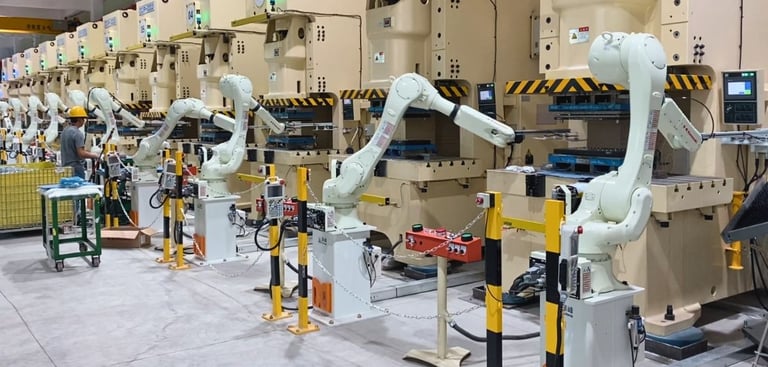
The Current-Central Robotics Integration System is specifically designed for sheet metal stamping production, aiming to elevate operational efficiency and precision through seamless automation integration. Its core functions are centered around flexible production, enabling enterprises to adapt to diverse production demands with high adaptability and operability.
Key Functions
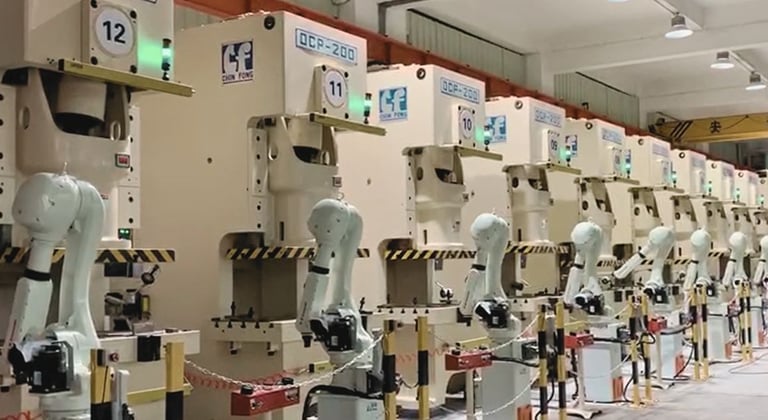
Easy Connection: Robots and presses form independent units, adopting a hand-in-hand connection mode to communicate with adjacent units. This mode supports real-time exchange of status information (e.g., machine tool and robot operating status) and allows for convenient and rapid system expansion. Newly added equipment can be seamlessly connected to the production line without disrupting existing operations.
Flexible Scaling: The system supports arbitrary adjustment of the number of robots and press machines in the stamping line. Enterprises can scale the system up or down according to production volume, order requirements, and process changes, ensuring optimal utilization of production resources.
Diversified Collocation: It can be equipped with various online auxiliary equipment, such as stamping equipment, reclaiming manipulators, and output conveyor belts. This diversified configuration enables flexible production scheduling, allowing the system to handle complex and diverse stamping tasks.
Two-Way Operation: Based on actual production scheduling needs, the system can flexibly switch the robot's online direction (left-to-right or right-to-left), ensuring smooth workflow and adapting to different workshop layout and production process requirements.
Detachable Configuration: The system can be grouped online and split into multiple independent production lines. This feature supports parallel production or independent operation of different tasks, greatly enhancing the flexibility of production organization.
Specification of Robotic Integration System for Sheet Metal Stamping
The Current-Central Robotics Integration System adheres to strict industrial standards, with stable and reliable performance parameters that fully meet the requirements of sheet metal stamping automation production. Key specification parameters are as follows:
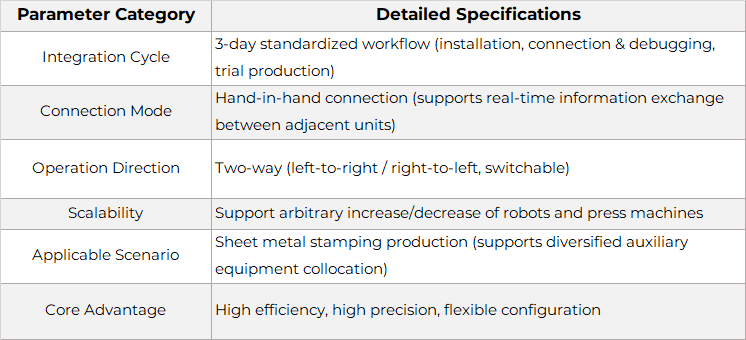
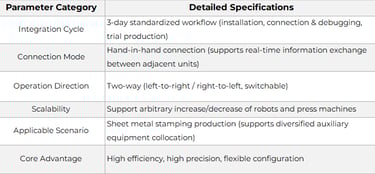
Integration Cycle: 3-day standardized workflow (installation, connection & debugging, trial production)
Connection Mode: Hand-in-hand connection (supports real-time information exchange between adjacent units)
Operation Direction: Two-way (left-to-right / right-to-left, switchable)
Scalability: Support arbitrary increase/decrease of robots and press machines
Applicable Scenario: Sheet metal stamping production (supports diversified auxiliary equipment collocation)
Core Advantage: High efficiency, high precision, flexible configuration
1/4 Core Functional Components
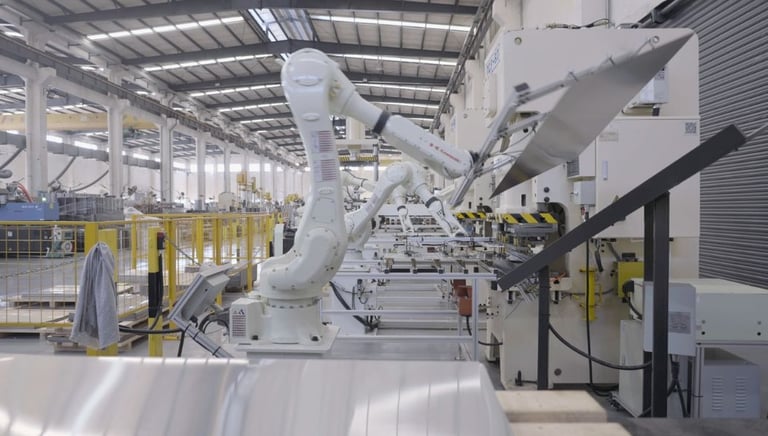
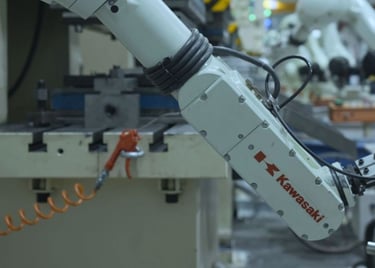
Including industrial robots (core execution unit, responsible for sheet metal grabbing, transferring, and stamping coordination) and press machines (stamping execution unit, matching robot actions to complete sheet metal stamping processing).
Main Parts of Current-Central Robotic Integration System for Sheet Metal Stamping
The Current-Central Robotics Integration System is composed of core functional components, auxiliary equipment, and control systems, all of which work together to ensure stable and efficient operation of the entire stamping automation line. The main components are as follows:
2/4 Auxiliary Equipment
Configurable according to production needs, including reclaiming manipulators (assist in precise grabbing and feeding of sheet metal), output conveyor belts (realize automatic conveying of finished products), and other stamping auxiliary equipment (improve production continuity).
3/4 Control & Communication System
The core of the entire system, supporting the hand-in-hand connection mode between units, realizing real-time status monitoring, information exchange, and coordinated control of robots and presses. It is responsible for system debugging, parameter setting, and fault early warning to ensure the synchronization and stability of the entire production line.
4/4 Installation & Fixing Components
Including installation brackets, fixing parts, etc., which ensure the accurate and stable installation of robots, presses, and other equipment, laying a solid foundation for the normal operation of the system.
1/5 Rapid Integration & Deployment
With a 3-day standardized workflow (Day 1: System Installation; Day 2: Connection & Debug; Day 3: Trial Production), the system can be quickly installed, debugged, and put into trial production in the customer's factory, greatly shortening the project cycle and reducing the impact on existing production.
Advantages of Current-Central Robotic Integration System for Sheet Metal Stamping
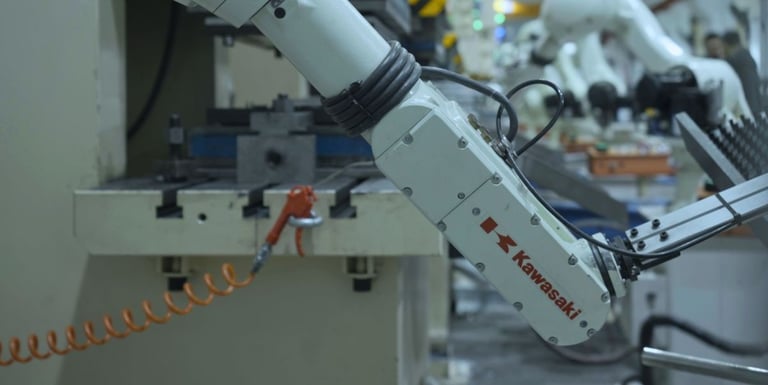
Compared with traditional sheet metal stamping production modes and other similar automation systems, the Current-Central Robotics Integration System has obvious core advantages, helping enterprises reduce costs, improve efficiency, and enhance core competitiveness:
2/5 High Flexibility & Adaptability
Covering multiple flexible features such as easy connection, flexible scaling, diversified collocation, two-way operation, and detachable configuration, it can adapt to different production scales, order types, and process requirements, solving the pain points of traditional production lines with poor flexibility and difficulty in adapting to diversified demands.
3/5 Enhanced Efficiency & Precision
Through seamless integration of automation, the system avoids the inefficiency and error caused by manual operation, greatly improving the continuity and stability of stamping production, while ensuring high precision of sheet metal stamping products.
4/5 Professional Technical Support
Backed by over 20 years of experience in sheet metal stamping and more than 10 years of expertise in robotic integration for sheet metal applications, the professional team provides full-process technical support from installation and debugging to after-sales maintenance, ensuring the long-term stable operation of the system.
5/5 Optimal Resource Utilization
The flexible scaling function allows enterprises to adjust the number of equipment according to actual production needs, avoiding resource waste caused by over-configuration or under-utilization, and reducing production and operation costs.
1/3 Service Guarantee
We provide a full-cycle service system for the Current-Central Robotics Integration System, including pre-sales consultation (customized solution design according to customer production needs), in-sales guidance (on-site installation, debugging, and operator training), and after-sales maintenance (regular inspection, fault handling, and technical upgrade support), ensuring that customers can use the system with confidence.
More About Current-Central Robotic Integration System for Sheet Metal Stamping
2/3 Application Scenarios
The system is widely applicable to sheet metal stamping enterprises in automotive parts, electrical equipment, hardware manufacturing, and other industries, especially suitable for enterprises that need to adapt to diversified production orders, improve production efficiency, and ensure product precision.